日本語
- English
- Español
- Português
- русский
- Français
- 日本語
- Deutsch
- tiếng Việt
- Italiano
- Nederlands
- ภาษาไทย
- Polski
- 한국어
- Svenska
- magyar
- Malay
- বাংলা ভাষার
- Dansk
- Suomi
- हिन्दी
- Pilipino
- Türkçe
- Gaeilge
- العربية
- Indonesia
- Norsk
- تمل
- český
- ελληνικά
- український
- Javanese
- فارسی
- தமிழ்
- తెలుగు
- नेपाली
- Burmese
- български
- ລາວ
- Latine
- Қазақша
- Euskal
- Azərbaycan
- Slovenský jazyk
- Македонски
- Lietuvos
- Eesti Keel
- Română
- Slovenski
- मराठी
- Srpski језик

電気の安全を守る「スマートガーディアン」
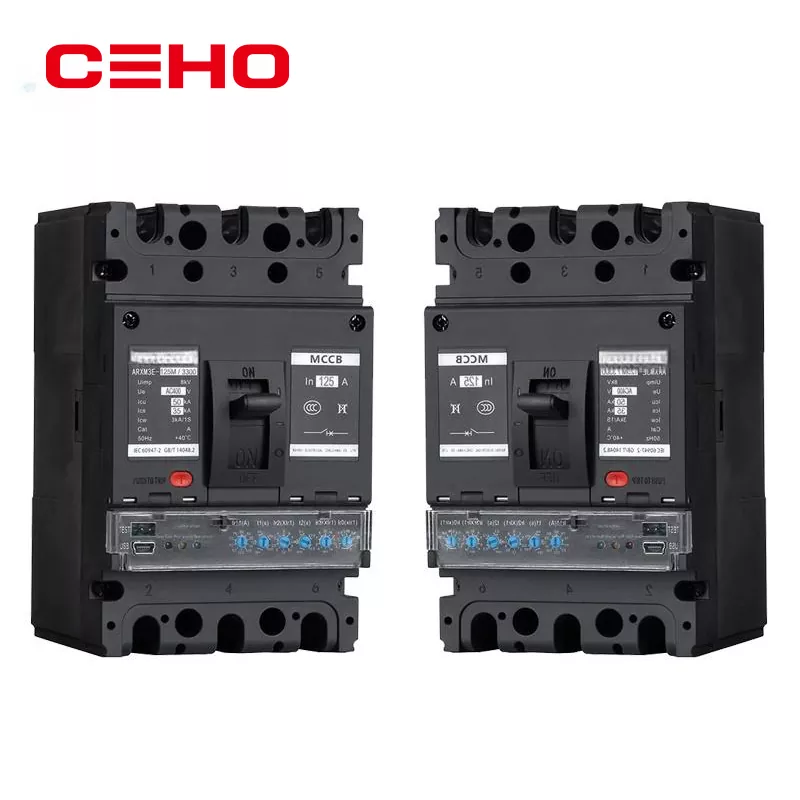
In modern electrical systems, there is a seemingly inconspicuous yet crucial core component – the circuit breaker. Like a "smart guardian" of the circuit, it silently protects the electrical safety of homes, businesses, and even city power grids. Whenever a circuit experiences overload, short circuit, or other dangerous situations, it can quickly cut off the power supply, preventing equipment damage or even fires. From small circuit breakers in home distribution boxes to massive high-voltage circuit breakers in substations, this small device has long been an indispensable safety barrier in modern power systems. I. The Core Principle of Circuit Breakers: How to Achieve "Safe Tripping"? The core function of a circuit breaker is "fault detection - rapid disconnection," and its working principle revolves around "current anomaly identification." Under normal circumstances, current is smoothly transmitted through the internal conductive circuit of the circuit breaker. However, when an overload (current exceeding the rated value) or short circuit occurs in the circuit (current surges instantaneously), the circuit breaker triggers its internal protection mechanism, completing the power disconnection operation within 0.01 to 0.1 seconds. This speed is far faster than human reaction time, minimizing the risk of danger. Structurally, a circuit breaker mainly consists of three core parts: Contact System: This acts as the "switch" of the circuit. Under normal conditions, it closes to conduct current; in case of a fault, it quickly separates and cuts off the circuit. The contact surface is usually plated with wear-resistant, highly conductive materials such as silver alloys to ensure long-term stability. Trip Mechanism: This is the "brain" of the circuit breaker, responsible for detecting abnormal current and triggering tripping. There are two common tripping methods: thermal tripping (using the deformation of a bimetallic strip to push the tripping mechanism to handle overloads) and magnetic tripping (using the magnetic force generated by an electromagnetic coil to push the tripping mechanism to handle short circuits). Some high-end circuit breakers also incorporate electronic tripping mechanisms for more precise protection. Arc Extinguishing System: When the circuit is broken, a high-temperature arc is generated between the contacts. If not extinguished in time, this can cause a fire. The arc extinguishing system divides the arc into multiple smaller arcs using metal grids, which are then rapidly extinguished using insulating gas or solid media, ensuring a safe and hazard-free power outage process. II. Circuit Breaker Classification: "Dedicated Guardians" for Different Scenarios Based on usage scenarios and technical characteristics, circuit breakers can be classified into several categories. Different types of circuit breakers differ significantly in structure and performance, and are suitable for different power system needs. 1. Classification by Voltage Level Low-voltage circuit breakers (voltage ≤ 1kV): The most common type, widely used in low-voltage power distribution systems in homes, office buildings, and factories. For example, the "air switch" (full name "molded case low-voltage circuit breaker") in a home distribution box typically has a rated current of 10A-63A, protecting sockets, lamps, and other household appliances from overload and short circuits. High-voltage circuit breakers (voltage > 1kV): Used in high-voltage power systems such as substations and power plants. They are larger in size and require the use of high-voltage switchgear. Their arc-extinguishing technology is more complex. Common types include oil circuit breakers, sulfur hexafluoride (SF6) circuit breakers, and vacuum circuit breakers. Among them, vacuum circuit breakers have become the mainstream choice in the high-voltage field due to their good arc-extinguishing effect and lack of pollution. 2. Classification by Protection Function
General-Purpose Circuit Breakers: These circuit breakers provide both overload and short-circuit protection, suitable for most power distribution scenarios, such as distribution boxes in homes and general businesses.
Residual Current Circuit Breakers (with Residual Current Module): These circuit breakers add leakage detection functionality to the general-purpose type. When a person experiences electric shock or a leakage current occurs (typically ≥30mA), the breaker trips within 0.1 seconds, effectively preventing electric shock accidents. These circuit breakers are commonly used in socket circuits in damp environments such as bathrooms and kitchens, as well as power supply circuits for handheld power tools.
Selective Circuit Breakers: Primarily used for coordinated protection between upper and lower levels in power distribution systems. They enable "precise tripping at the fault point," preventing power outages in the entire system due to a single circuit fault. For example, a selective circuit breaker in the main distribution box of an office building ensures that when a branch circuit on a certain floor fails, only the circuit breaker on that branch circuit trips, without affecting the power supply to other floors. III. Circuit Breaker Selection and Maintenance: Ensuring the Reliability of Your "Safety Guardian"
1. Selection Key Points: Matching Needs is Crucial
Determine Rated Current: Calculate based on the circuit's maximum load. In household circuits, lighting circuits typically use 10A-16A circuit breakers, socket circuits use 16A-20A, and high-power appliances such as air conditioners require separate circuits, using 20A-32A (specific calculations depend on appliance power; formula: Current = Power ÷ Voltage).
Prioritize Branded Products: The quality of the circuit breaker directly affects electrical safety. It is recommended to choose reputable brands with 3C certification (such as Chint, Delixi, Schneider Electric, etc.) to avoid using uncertified, inferior products. These products may have issues such as delayed tripping or false tripping, creating safety hazards. 1. Select Function Based on Scenario: Circuit breakers with leakage current protection must be selected for humid environments or circuits involving human contact (such as sockets and power tools); for high-voltage systems or industrial scenarios, appropriate high-voltage circuit breakers or selective circuit breakers should be selected based on the voltage level and load characteristics.
2. Routine Maintenance: Extend Lifespan and Ensure Reliability
Regularly Inspect Appearance: Check the circuit breaker casing monthly for damage, burn marks, and loose terminals (loose terminals may cause poor contact and overheating). If any abnormalities are found, replace or tighten them promptly.
Avoid Frequent Tripping: If the circuit breaker trips frequently, first investigate the cause (e.g., whether multiple high-power appliances are being used simultaneously causing overload, or whether there is leakage or short circuit). Do not blindly replace it with a circuit breaker with a higher rated current, otherwise, an accident may occur due to protection failure.
Regularly Test Leakage Current Protection: For circuit breakers with leakage current protection, press the "test button" (usually marked "TEST") once a month. If it trips normally, the leakage current protection function is effective; if it does not trip, stop using it immediately and replace it to avoid the risk of electric shock. IV. Conclusion: From "Passive Protection" to "Intelligent Upgrade" With the intelligent development of power systems, circuit breakers are also constantly being upgraded. Today, intelligent circuit breakers are gradually entering homes and businesses. They not only perform traditional protection functions but also monitor current, voltage, and power data in real time through IoT technology. Users can view circuit status via a mobile app and even remotely control the circuit breaker's on/off state. For example, when an overload occurs in the home, the intelligent circuit breaker will first send a warning message; if the user does not handle it in time, it will automatically trip, balancing safety and convenience. From the initial simple switch to today's intelligent protection device, the development of circuit breakers has witnessed the progress of power safety technology. As the "last line of defense" for electrical safety, choosing the right circuit breaker and maintaining it properly allows us to enjoy the convenience of electricity while staying away from electrical risks, truly achieving "safe and worry-free electricity use."
関連ニュース
- Why can three-dimensional wound core transformer achieve low noise and energy saving?
- Why can't dry-type transformers be stored and transported upside down for a long time?
- What are the methods and steps for wiring dry-type transformers?
- What Makes the “Heart” of the Power System Beat Steadily?
- Why is my oil-immersed transformer overheating?
- How can the lifespan of distribution transformers be extended through routine maintenance?
メッセージを残してください
ニュースのおすすめ